
A Window of Opportunity: Reaching Refugees for Christ
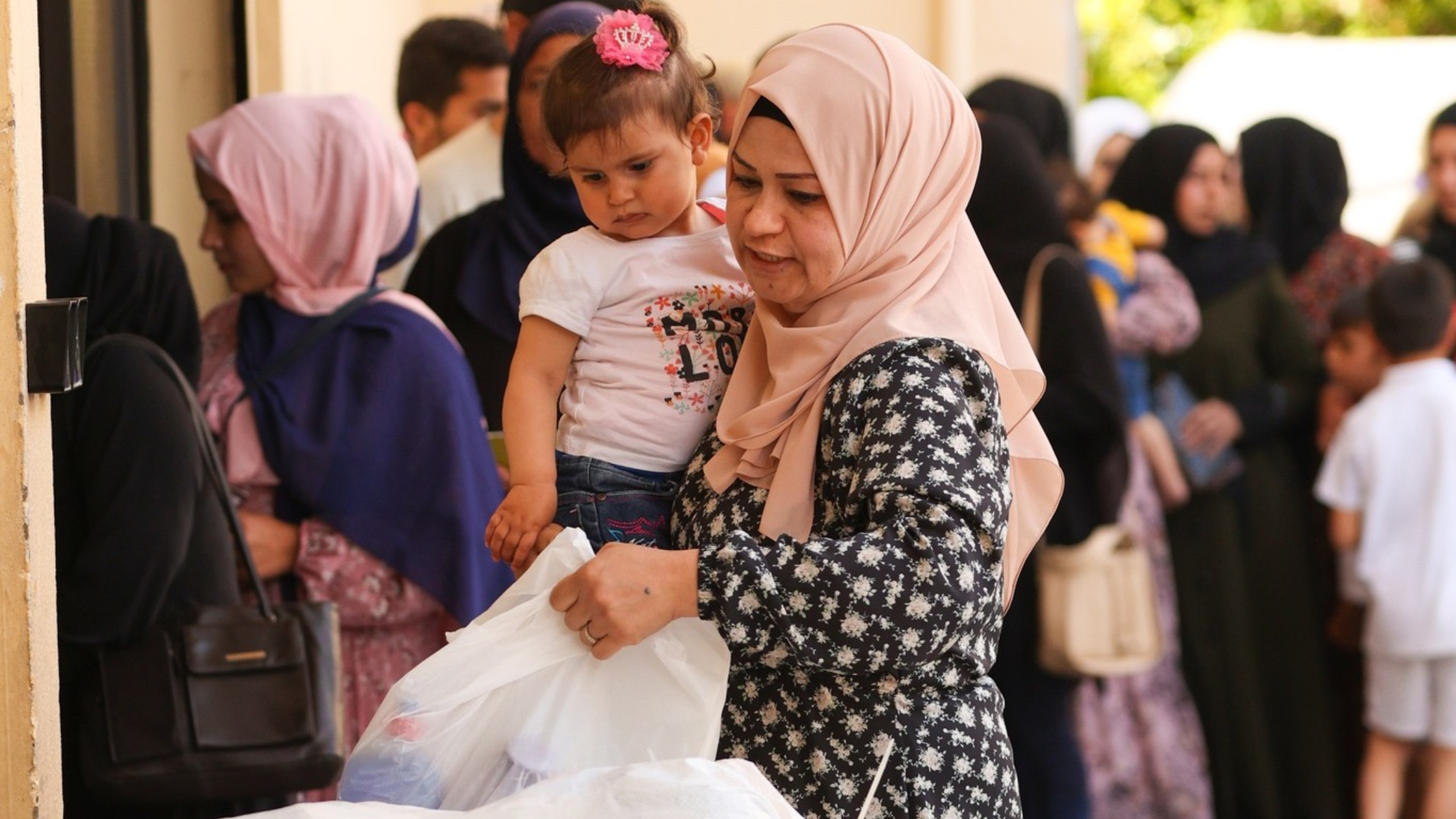
Food and supply distribution for refugees by a local church.
Fahed’s world crumbled the night his family’s home in Hama, Syria was shattered by the relentless war. For years, they had clung to the small piece of land that sustained them, enduring the conflict. But one fateful night, as the ground trembled beneath them, Fahed, his wife, and their children ran for their lives. Within moments, their home—and their neighbor’s—collapsed into rubble.
With nothing left, they embarked on a perilous journey, seeking refuge wherever they could. First, they found shelter with relatives, hopping from one family home to the next. Their cousins gathered what little they had to help them escape, guiding Fahed’s family through dangerous mountain passes into Lebanon. They finally arrived in Ghazieh, where a relative offered them a temporary place to stay.
Starting over meant hard, grueling work. Fahed took to the fields, laboring from dawn till dusk to provide for his family. Their 12-year-old son, Omar, despite his hearing loss, joined in the effort. Yet, no matter how hard they worked, the family’s income barely covered the basics. Omar needed medical attention, as did Fahed’s daughters, who both suffered from a hip condition. But with no money for doctors, their health remained at risk.
Their new life in Lebanon was a far cry from the one they had left behind. They lived in a sweltering shipping container with no electricity, holes in the floor that let in snakes and scorpions, and summer heat so intense it made their children sick. They had arrived with nothing but the clothes on their backs, and survival was an unending battle.
Then, a glimmer of hope appeared. Heart for Lebanon found Fahed’s family and began bringing them monthly food and supplies. It wasn’t much, but it eased the daily burden. “The food portion helped us throughout the month,” Fahed’s wife said, her gratitude evident. For a family that had lost everything, these small acts of kindness—visits, provisions, a helping hand—brought relief and a sense that they weren’t entirely forgotten.
And with the supplies came a message of hope.
“Meeting refugees’ basic needs is an honest opportunity to gain their trust and draw them into a conversation about Jesus Christ,” explained Tom Atema, International Office Lead and Co-founder of Heart for Lebanon. “When we come into your home, we build a relationship. I want to know your dreams, your concerns, your burdens. Those conversations over time will eventually draw them into a conversation about Jesus. There’s no set timeline, but eventually they will reflect, ‘You never asked me for anything. Why?’ and we have an opening to share the gospel.”
The Crisis: Millions Displaced
The Middle East is facing its largest refugee crisis since World War II, with millions displaced due to ongoing wars and political turmoil. The total number of displaced people in the region is estimated at around 29 million, though some reports suggest it could be as high as 37 million.
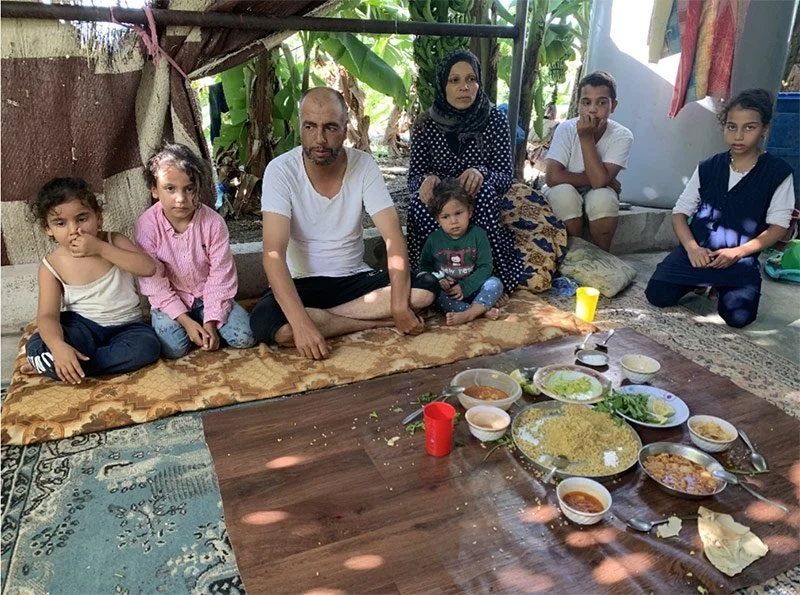
A Syrian refugee family in their home in Lebanon.
Take Syria as an example. Before the war, its population was 22 million. Today, over 14 million Syrians have been displaced—half forced to leave the country, the other half fleeing to safer areas within Syria. In other words, more than 50 percent of the Syrian population have become refugees, and similar situations are seen across the region.
This mass displacement stems from the political upheaval of the Arab Spring in 2010, followed by the rise of ISIS and civil wars in Yemen, Libya, and Syria. Conflicts in Afghanistan, Iran, Iraq, Sudan, Palestine, Gaza, and Lebanon also continue to destabilize the region. These conflicts have largely been fueled by deep-seated religious and political tensions, with extremist groups exploiting instability to gain power. Many point to extremist interpretations of Islam as a significant factor driving the violence and unrest, especially in the areas where radical groups have taken control.
Families like Fahed’s have fled to neighboring countries like Lebanon, Turkey, Egypt, and Jordan only to face further hardship. These host countries are already struggling with their own challenges, and the influx of refugees worsens an already difficult situation.
In most countries, displaced people like Fahed aren't even legally recognized as refugees but rather as "temporary guests," leaving them without basic rights. As temporary guests, they cannot work, open bank accounts, or attend school. Even when they do find employment, it’s limited to low-wage jobs since their professional credentials are seldom acknowledged by their host country.
“The government intentionally makes life difficult to encourage them to leave,” explained Tom.
Due to past issues, refugee camps are outlawed in many of the countries refugees are fleeing to. This means refugee populations are often dispersed within communities, making their struggles less visible. Due to the lack of official refugee status and visible camps, international organizations like the United Nations provide little support.
In Egypt, Marian Frances (who goes by Maro) with Healing Grace noted that Sudanese refugees face additional racial discrimination. “The increased demand on limited resources makes locals anxious, and Sudanese often suffer hate crimes because of their skin color.”
The Window: Searching for Hope
“The church is the answer to all this suffering,” remarked Ehab Youssef, Strategy Director for the Middle East and North Africa (MENA) at the Maclellan Foundation. “Christian ministries can holistically provide for the needs in all these countries—emotional, physical, and spiritual.”
“These are historic times. We cannot miss this opportunity. Jesus is doing something special in this part of the world. I’ve never seen so many Muslims coming to Christ. It’s unprecedented.”
Ehab shared that ministries in the MENA region are reporting thousands of Muslims coming to Christ. He describes this unusual openness to the gospel as a “window of opportunity,” a brief period when people are especially receptive to Christ's love and there is an opportunity to share it. “In times of crisis, people are often more open to new perspectives, including spiritual ones, as they search for meaning and comfort in the midst of uncertainty,” he explained.
Tamer Alia, Executive Director of Healing Grace in Egypt, confirmed this, “Because of the trauma refugees have experienced, there is a greater openness to any message of hope.”
The Islamic faith itself may be a key factor in this unprecedented openness.
“99 percent of refugees fled their homes because of the acts of radical Muslim groups,” explained Mamdouh Ezzat, CEO of Together Network. “Their lives were destroyed in the name of Allah, and now they’re asking, ‘Who is this God? If He loves us, why did He allow this suffering? Is He real?’” As Mamdouh and his team work with refugees in Syria, Lebanon, Egypt, and North Africa, they see these deep questions about God leading many Muslims to Christ.
The Tactics: Meeting Needs and Making Disciples
But to answer their questions, you first must gain their trust.
A key part of sharing the gospel with refugees is meeting their immediate needs. “It’s hard to tell someone that Jesus loves them when their basic needs aren’t met,” Tamer explained.
His ministry, Healing Grace, focuses their refugee work primarily on Sudanese women and children living in Cairo, Egypt. At their church-based community centers, women receive skills training, basic literacy education, and trauma healing, along with daily meals. Children participate in Awana groups and attend a Christian school, while the women engage in a discipleship ministry.
Tamer’s colleague Maro noted, “The opportunity is even greater with the Sudanese. Because they are not Egyptian, we have greater freedom to share the gospel with them.”
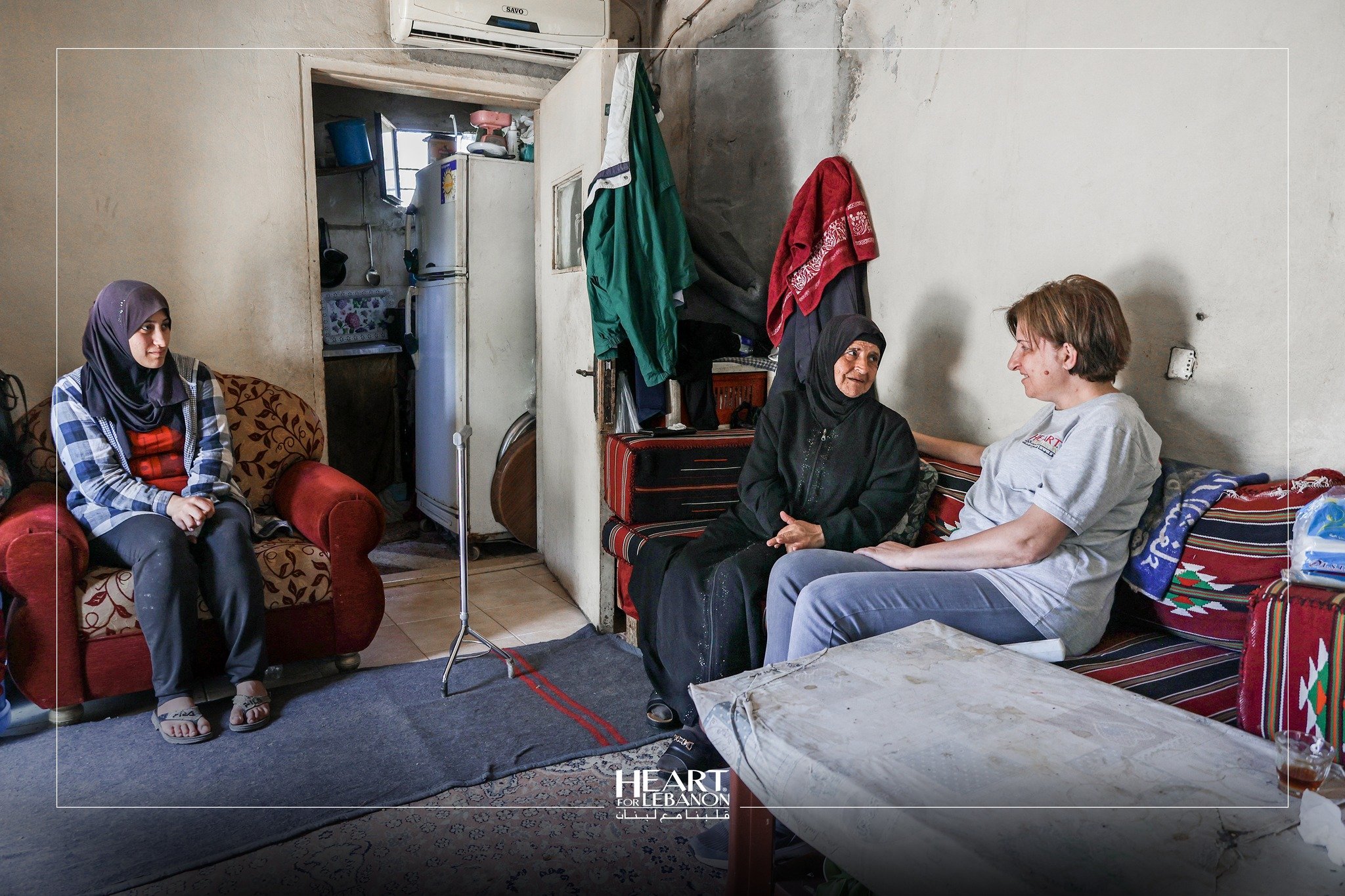
A home visit with Heart for Lebanon. These visits give the ministry team the opportunity to provide support and encouragement, share the gospel, and pray together.
Healing Grace also works with an eye toward the future, training Sudanese church leadership to reach their own. “We pray and hope that when this war ends, they can return home and rebuild their country, but with a new purpose and hope in Christ,” said Tamer.
Healing Grace is not alone in its use of humanitarian aid as a lead into its kingdom work. Heart for Lebanon provides everything from food distribution, to blankets, to a school for Syrian children for the 3,500 families it serves monthly. To enroll their children in the school, parents must agree to let their children read the Bible and to have monthly conversations with staff in their homes. Slowly, relationships build, trust forms, and deeper spiritual conversations begin.
As a result, Heart for Lebanon currently has 2,200 adults in small group Bible studies and has planted two multiethnic churches. And their numbers continue to grow.
Similarly, Together Network pairs relief assistance with spiritual outreach, training Muslim-background believers (MBBs) to disciple others.
“Most MBBs began their journey to faith while seeking help as refugees,” explained Mamdouh. “They initially turned to the church for practical support, but what touched them most was the love and care they experienced. It was through this that the Holy Spirit began working in their lives.”
One such story Mamdouh shares is that of Shereen, a Sunni Muslim from Syria. Converting to Christianity seemed unthinkable for Shereen, who grew up in a deeply fanatic Muslim family. After fleeing the war, Shereen and her family arrived in Lebanon with nothing. Desperate for help, Shereen sought aid from a local church, though she was adamant about one thing: she would not read the Bible.
But over time, the love and kindness she encountered began to soften her heart. She started comparing the Bible with the Quran, studying both, and after a year, Shereen made a profound decision: "Yes, I will follow Him. He is the One."
Unable to tell her husband about her faith, Shereen secretly took her four children to church each week. When her husband grew suspicious, he began beating her, but she never wavered. Her faith only deepened, and today she ministers to 60 MBB families.
Shereen’s story is one of thousands, representative of how Muslim refugees are coming to Christ.
“Their situation has made them more open,” Mamdouh explained. “Being separated from their families and on their own gives them more freedom to make choices. Displacement increases their freedom. And when people are in desperate need, they are often more humble and willing to listen, giving others a chance to speak into their lives,” Mamdouh explained.
The Urgency: A Call to Action
You never know when the window will close.
According to Ehab, there have been other windows of opportunity that did not last. For example, the Arab Spring in 2010 was a pivotal moment when many people in the Middle East were searching for hope and answers. “It created a unique window of opportunity to share the gospel on a large scale. But as the region stabilized, that sense of urgency to find hope faded, and people became less receptive,” Ehab recounted.
“The window is currently wide open, but I do see the shades starting to be pulled down,” commented Tom. “With ongoing instability in the region, things can change quickly, communication channels can close.”
This is why it’s crucial to help ministries develop strategies tailored to the needs on the ground, enabling the local church to effectively share Christ’s love and advance the Great Commission. Strategic grants focus on equipping the church with the right tools and approach to meet this opportunity with purpose and impact.
“These refugees are only here temporarily. We want them to leave with Christ in their hearts,” Mamdouh emphasized.
The goal extends beyond individual conversions—it's about creating disciples who will, in turn, reach others, multiplying the impact for Christ. Leadership development and discipleship training are essential to ensuring new believers are equipped to share the gospel. “When this crisis ends, people will return to their countries as new disciples of Christ,” Ehab explained.
But, one thing is clear: we must act with urgency.
“These are historic times. We cannot miss this opportunity,” said Tom. “Jesus is doing something special in this part of the world. I’ve never seen so many Muslims coming to Christ. It’s unprecedented. If we, as followers of Jesus, do not take advantage of this time, I believe we’ll be held accountable.”