
Accelerating the Great Commission: Why Capacity Building and Generosity Strategies Multiply Kingdom Impact
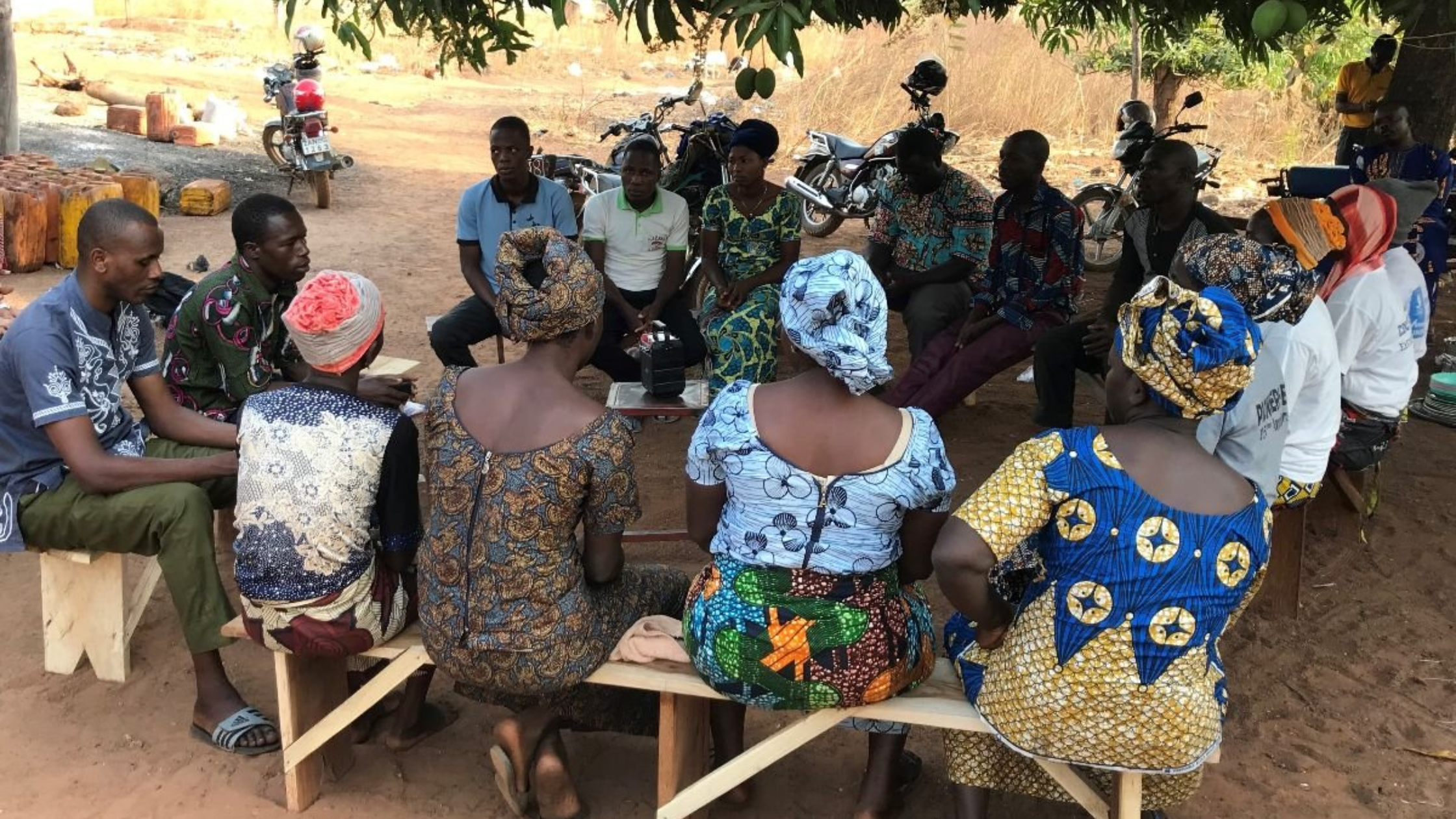
The Malinke People group involved in Disciple Making Movements’ church planting initiatives.
A Note from David Denmark
After coming to faith in college, I followed the typical path of new believers; I was eager for my friends and family to also discover the Lord. But my understanding of the Great Commission didn’t extend far beyond my immediate, intimate social network. When I joined the Maclellan Foundation, the Great Commission calling took on a deeper purpose. My conviction transformed from a personal passion to an institutional mission: strategically stewarding funds in obedience to Matthew 28:19, “Go and make disciples of all nations.”
As a foundation, our role is not to perform evangelism directly, but to empower others to do so effectively and efficiently. Through stewarding our resources, experience, and influence, we amplify ministry impact by equipping organizations to share the gospel, disciple believers, and foster thriving local church movements.
“In our zeal to accelerate Great Commission activities, we were inadvertently pushing some of our partners beyond their breaking points.”
Over the decades, we continued to grow in our ability to identify good models of gospel impact, partnering with ministries to accelerate and multiply them. As we expanded our field teams, we gained the internal capacity to work more deeply with our grantee-partners. Specifically, we became better listeners and sometimes heard troubling feedback.
In our zeal to accelerate Great Commission activities, we were inadvertently pushing some of our partners beyond their breaking points. The exciting growth associated with our granting at times came with an unexpected cost: organizational burnout. Leadership turnover increased, marriages suffered, and organizations struggled to keep up. Instead of thriving, some ministries were collapsing under the weight of rapid growth without adequate infrastructure.
Our intentions were good, but we realized we needed to adapt our approach.
Asking our partners, their response was clear and consistent: they shared our passion for the unreached, but they needed sustainability. Not just financial support, but the organizational capacity to truly thrive over the long term.
This revelation directly influenced our funding strategy. While keeping our sense of urgency about the Great Commission, we also wanted to accelerate and scale in a sustainable way. Instead of simply funding projects, we began investing in the infrastructure that makes those projects possible. We started funding critical behind-the-scenes support: strengthening boards, diversifying funding sources, implementing robust reporting systems, and providing staff training. Multi-year funding commitments replaced short-term, high-pressure grants. While funding evangelism and discipleship remains central to our mission, we now also focus on building the capacity of organizations to do this work more efficiently, effectively, and sustainably.
In short, we began focusing on our partners’ ability to accelerate and scale Great Commission work.
But we didn't stop there. We recognized that true sustainability requires more than internal organizational strength—it demands local ownership and support. Our vision expanded to cultivating a culture of generosity within global Christian communities. We know that true sustainability happens when ministries are supported by their own communities, not just by checks from the West.
“I want to be clear on this point: this “bridge” strategy that our collaboration is pursuing isn’t about eliminating Western funding in global missions. It’s about reducing dependency and activating more Kingdom resources worldwide.”
Crucially, this call to generosity isn't restricted to wealthy individuals giving more money for the Kingdom. It's about transforming hearts, teaching Christians at all economic levels to respond to a generous Lord and Savior with whatever means they have. You don’t have to convince an apple tree to create apples; all you need is to create an environment for a thriving tree. Similarly, we are intentionally creating environments for more believers to respond to their generous God.
This approach means more than monetary support. In addition to financial giving, local believers also contribute through prayer, networking, and volunteering. By shifting from external dependency to local empowerment, ministries gain not only more resources, but deeper cultural understanding and stronger relational networks. Ministries report that this shift has not only increased funding, but it has also deepened their connection to the communities they serve. When more Christians give their time, talent, and resources, ministries thrive.
Our goal is that our funding relationships with ministry partners will shift over time. As ministries secure local funding and support for core operations, Western resources can focus on expansion, capital projects, and disaster response. I want to be clear on this point: this “bridge” strategy that our collaboration is pursuing isn’t about eliminating Western funding in global missions. It’s about reducing dependency and activating more Kingdom resources worldwide. By reducing dependency and unlocking local potential, we believe we can amplify the Great Commission's impact more effectively than ever before.
This isn't just a funding strategy—it's a holistic approach to fulfilling Christ's mandate. By building sustainable, locally owned ministries, we're creating a robust platform from which the gospel can spread, ensuring that more can be done to advance God's Kingdom.
Our mission remains unchanged: to see Christ's Kingdom come. But our method has evolved, promising a more resilient, empowered, and impactful approach to global missions.