
From Grassroots to Global: Scaling Effective Ministries
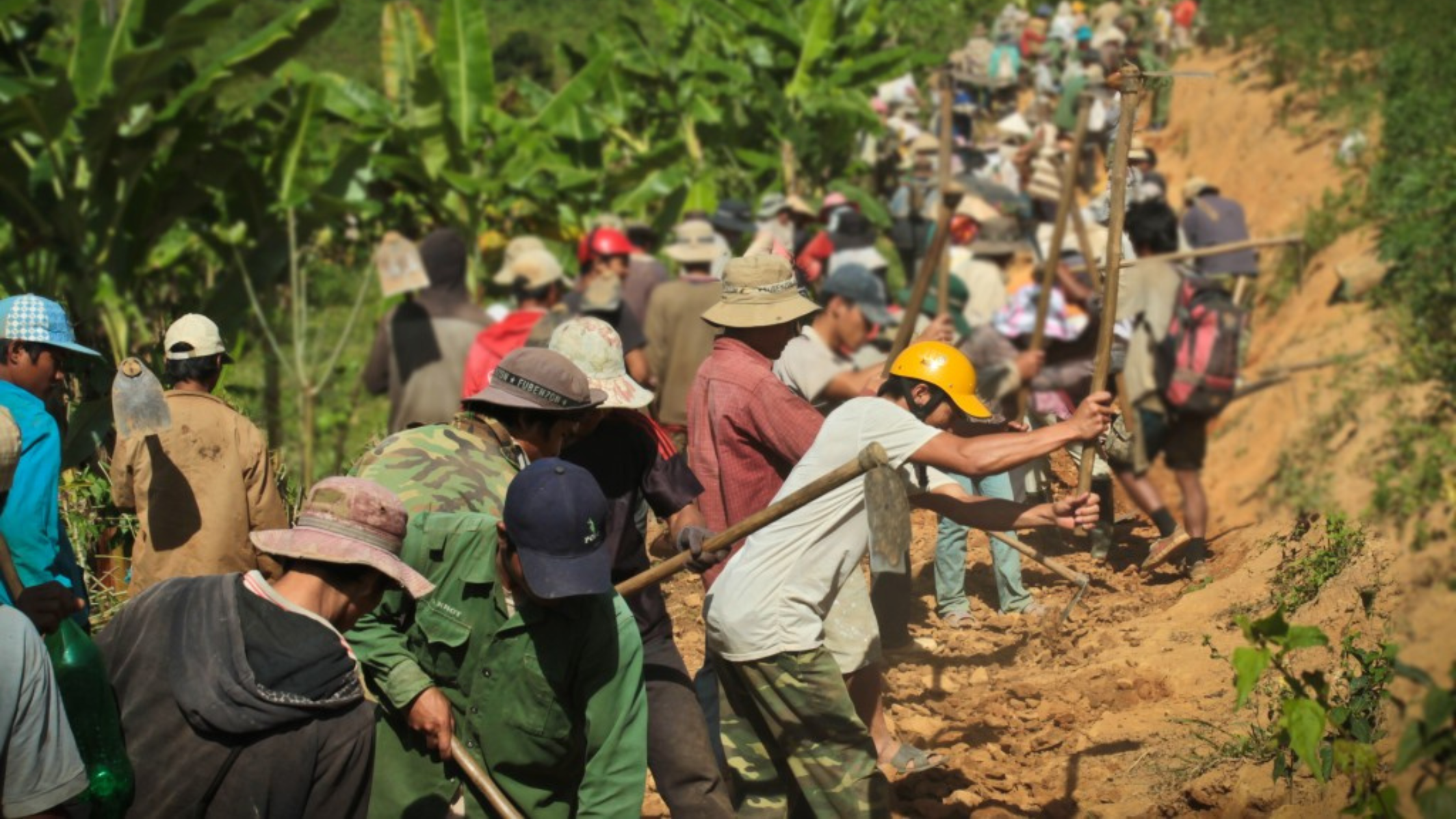
An “Act of Love” building a road in Central Vietnam to a new farming area for the whole community in order to ensure they are able to grow enough food.
Disillusioned by the small dent in poverty made through traditional approaches, Anna Ho had a radical idea. What if you could move people out of extreme poverty—with no outside resources—by simply applying the biblical truth to love their neighbors?
In 2003, she decided to put the idea to the test with a basic curriculum and a single trainer tasked with finding and equipping ten Vietnamese churches. She knew she needed an indigenous trainer to reach the remote mountains of Vietnam, where she couldn’t go herself as a white New Zealander. After four months of silence, the trainer reappeared and proudly shared that she had established partnerships in some of the poorest areas—where food was scarce, latrines and wells were nonexistent, and few people could read or write. However, instead of ten churches, she had trained one hundred sixty! And more were asking for help.
The premise was simple—teach people that God cares about every aspect of their lives and that they should live for His glory. Once their beliefs were transformed, they were challenged to express God’s love to their communities through “Acts of Love”—simple projects they could do with what they already had. Working in a widow’s field. Cleaning up litter. Fixing a broken pane of glass. Buying a pair of shoes.
While the “acts” started small, they eventually grew in size. They dug wells to provide clean water to the entire community. They constructed roads for neighboring villages to get to the market. They built houses for those who had none.
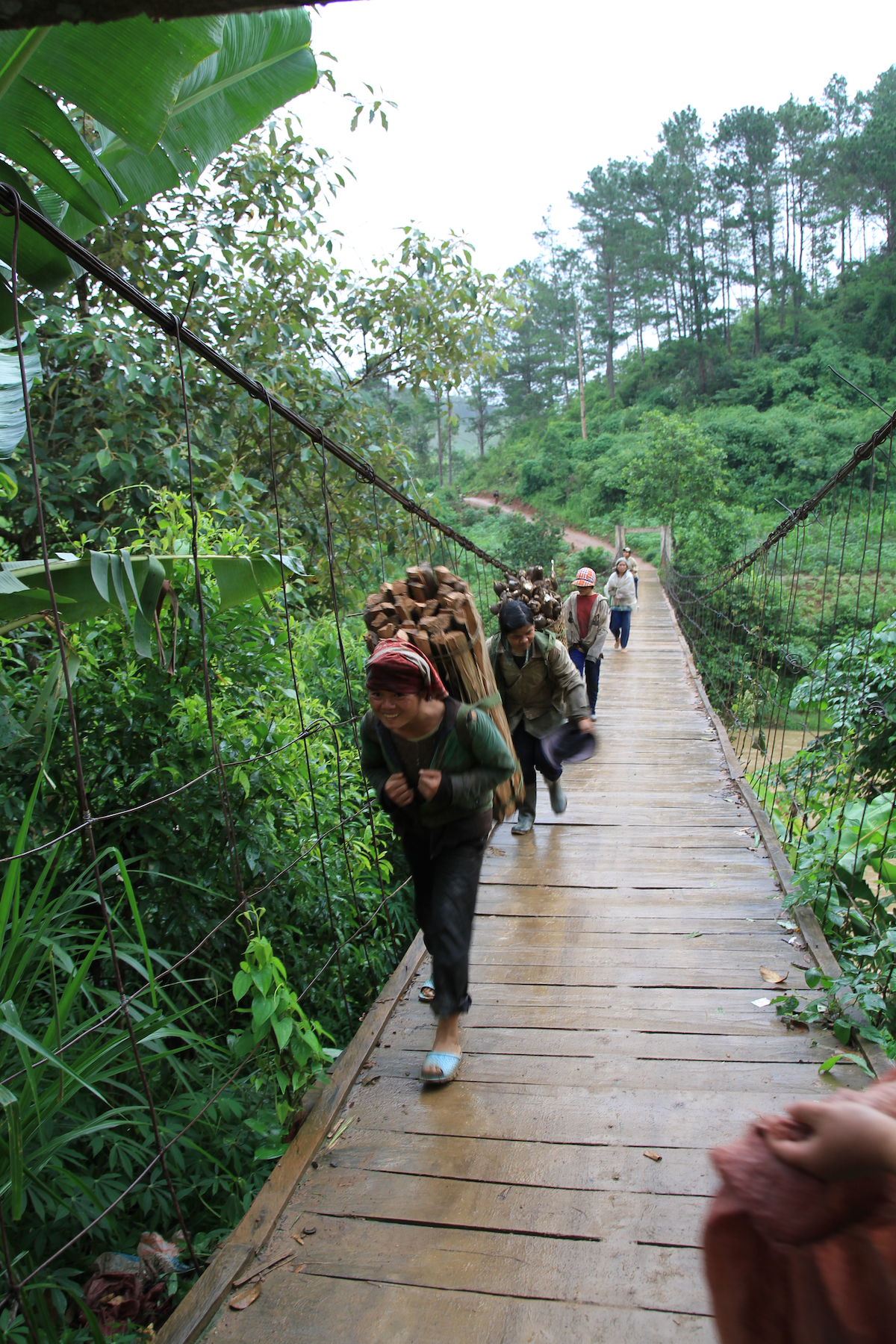
A bridge built as an “Act of Love” in another village in Central Vietnam. Watch a video about how it transformed the community.
Where Acts of Love were performed, the church grew in strength and number.
The perception of Christians in the region changed. Hostile government officials began to support the church instead of persecuting it. More people came to Christ.
Three years into the project, Anna was in a leaders’ meeting when a trainer said, “Everyone in my area has been transformed.” Anna, skeptical, asked for details. The trainer explained, “Now we have food year-round, all children are in school, people are cured of addiction… If we want to help a poor person, we have to go to a neighboring village.”
God was doing something incredible in the mountains of Vietnam among a highly persecuted people.
Despite having no plans to expand their ministry beyond Vietnam, word spread. Others wanted to replicate their model.
Over a decade later, the ministry founded by Anna and her husband Nam—Reconciled World—has seen God lift over six hundred communities across twenty-seven countries out of poverty through the work of the local church.
“I never in a million years expected this to happen,” reflected Anna. But, God had bigger plans.
Fund the Systems to Enable Growth
One of the most strategic ways foreign funders can support a ministry is by helping it build the infrastructure needed to scale.
Anna had initially been hesitant to introduce foreign funding to the local churches. “Our model relied on challenging the church to use their own resources and see how God shows up,” she explained. So, when Randy Kennedy, the Maclellan Foundation’s strategy director for Southeast Asia, met her at a conference in 2008, there was no talk of grants. Randy had already heard about the work being done and was intrigued by what Anna and Nam were doing in Vietnam. Instead of a grant, Randy asked if he could visit and see the work.
Over the next two years, Randy made four trips to Vietnam trying to understand the ministry and what was making them have such an unprecedented impact. He connected them to partner ministries. He told others about their work.
When it came time to share the model outside of Vietnam, the relationship was well established, and grants from Maclellan and other partners helped them create the systems essential for scaling. They had to standardize the curriculum. They had to translate it into English (it was originally in Vietnamese!) and then into other languages as the work spread to Myanmar, then India, and eventually across other parts of Asia and sub-Saharan Africa. “Having people who believed in us (like Maclellan) …God opened many doors in many different ways,” Anna shared.
Leverage Multiplication Models
““One thing that ministries who scale well have in common is that their model for growth involves equipping others to do what they do; they teach the principles and ideas, and then empower others to execute the work, following a multiplication model. ”
A key to scaling globally is a focus on multiplication—training and equipping others to do the work. “That’s one thing that ministries who scale well have in common,” explained Randy. “Their model for growth involves equipping others to do what they do; they teach the principles and ideas, and then empower others to execute the work, following a multiplication model where those trained, in turn, train others.”
All Reconciled World’s organizational efforts focus on teaching the principles, providing the curriculum, and sending master trainers to train other local trainers. The local church covers all other costs. With this model, Anna said you must have a willingness to step back and let God be in control. “We don’t even know exactly how many churches we work with. We can count those we support directly, but leaders wind up training others outside our direct contact… We know there are thousands more churches supported than the hundreds we can count.”
Solve Real, Universal Problems
As Randy has worked with many ministries throughout his career, those that scale have something in common: they have a real solution to a real problem. “When you do this, it explodes. People want it.”
Where Anna was able to devise a simple approach and watch it grow organically, some problems are more complex and require time to find an effective solution.
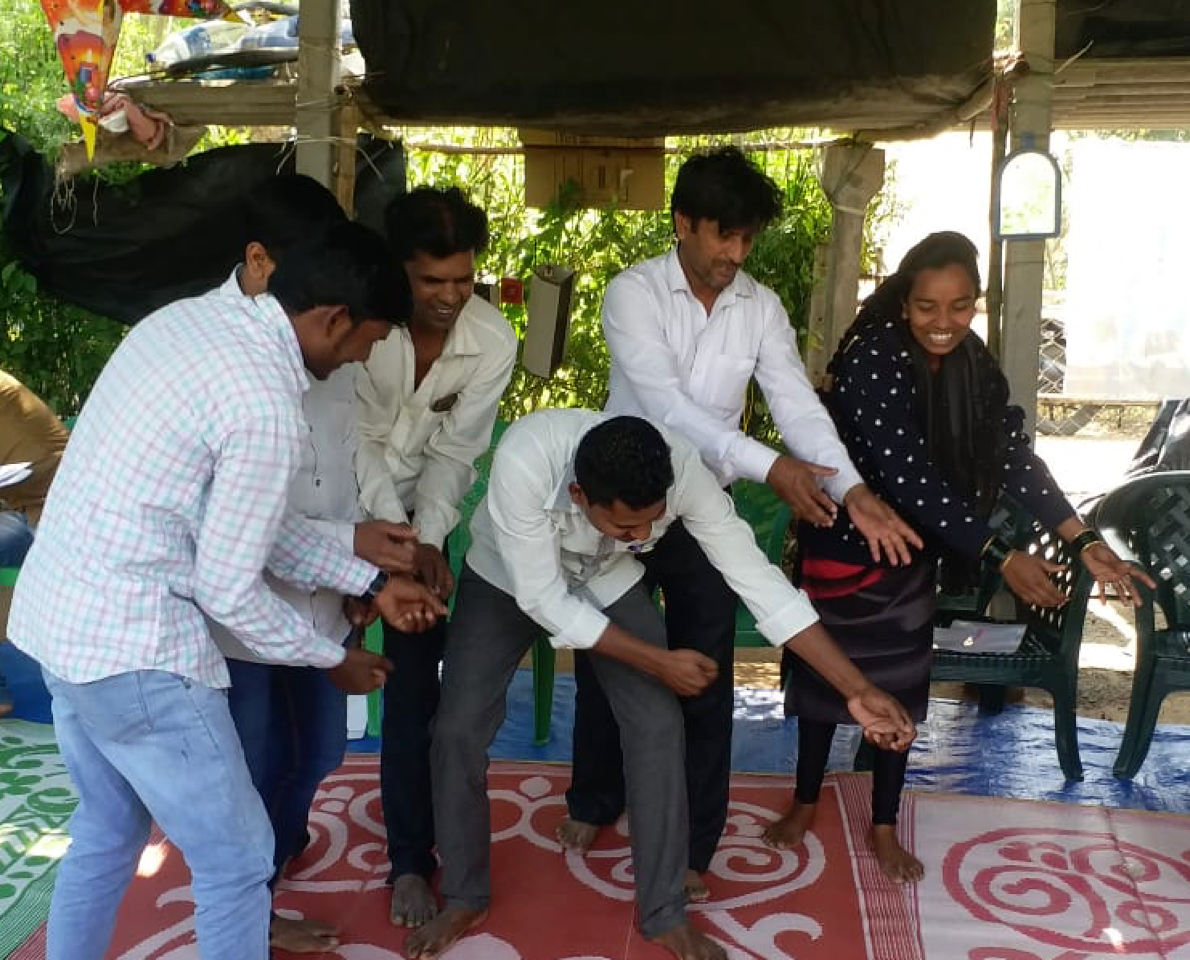
In India, role playing the “Rice Field” Way of Leadership. This is one of the activities in the flagship module of The Garden Project.
In 2007, the Lausanne Movement conducted a study to identify the key issues facing the church in the twenty-first century. One of the most prominent was that of orality, i.e. much of the world coming to Christ was illiterate, learning through story and oral means rather than through western concepts and abstract theory. Although oral means of evangelism (like the Jesus Film or the work of Scriptures in Use) were effectively growing the church, no one was developing its leadership.
“99.9% of everything available as resources for leaders came from a western way of doing things, for literate people” explained Rick Sessoms, a Lausanne board member with a thirty-year background in leadership development.
While Rick initially didn’t feel like he was the obvious candidate to lead the charge, someone had to tackle the problem. In 2009, he launched Freedom to Lead, armed only with an idea: they would teach Christ-centered leadership theory to oral people through story.
All he needed was a $20,000 grant to get started.
“Randy (and Maclellan) took a chance on us. All we had was an idea,” remembers Rick. “He could envision what the potential could be.”
It took four years to develop, piloting the curriculum through an iterative process with twenty leaders in North India. All the while, Maclellan stood by them. “You can’t have a short-term mindset,” explained Randy. “You can’t do this overnight. You have to stick with it.”
In just thirteen years, the model is now used in sixty countries around the world. Known as “The Garden Project,” they focus all their efforts on giving it away and allowing those they train to make it their own. By partnering with indigenous ministries, they now train leaders across South Asia, Africa, and Latin America.
Recognize it Belongs to God
Reconciled World and Freedom to Lead are only two of the many ministries Maclellan has supported in going from grassroots to global. Other organizations like ThinkSMALL and Inspire Indonesia have similar stories of growth, moving from local effectiveness to global effectiveness without losing their purpose. While the ministries and missions vary, the methods stay consistent.
According to Randy, organizations that scale all have one thing in common: a clarity of mission. “They are Kingdom-minded, not organizational-minded. They know that what they have doesn’t belong to them; it’s God’s and they don’t want to hold it back.”
This sort of organization is run by a leader who is clear about their walk with the Lord. “They are servant-minded and have a genuineness of spirit that you can perceive,” reflected Randy. “They are not insecure about what they are called to do.”
It comes down to simple faith, recognizing that it all belongs to God anyway.
“We’ve learned that the church around the world has a lot more capacity than we would ever dream or give it credit for,” commented Anna. She understands her ministry’s role is to come alongside the local church to equip and support.
Randy sees the foundation’s role in a similar light when it comes to helping find and scale successful ministry models. “Building trust and a supportive relationship is what matters. It’s founded on a shared belief in the need that’s being addressed and an alignment of purpose. We’re doing the same things, from different roles.”